Quick Answer
- Open your Swiggy order history.
- Load old orders properly before calculating.
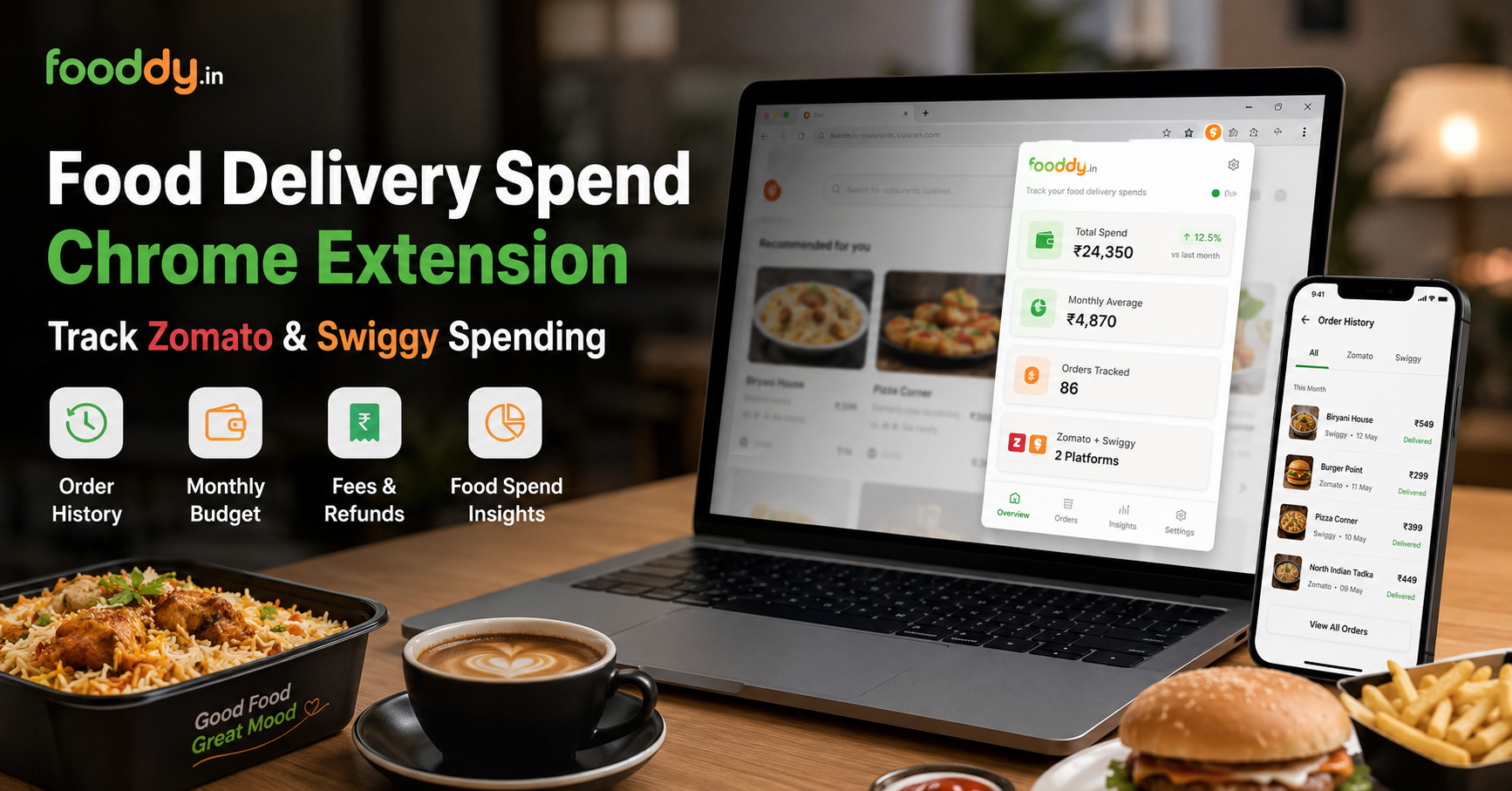
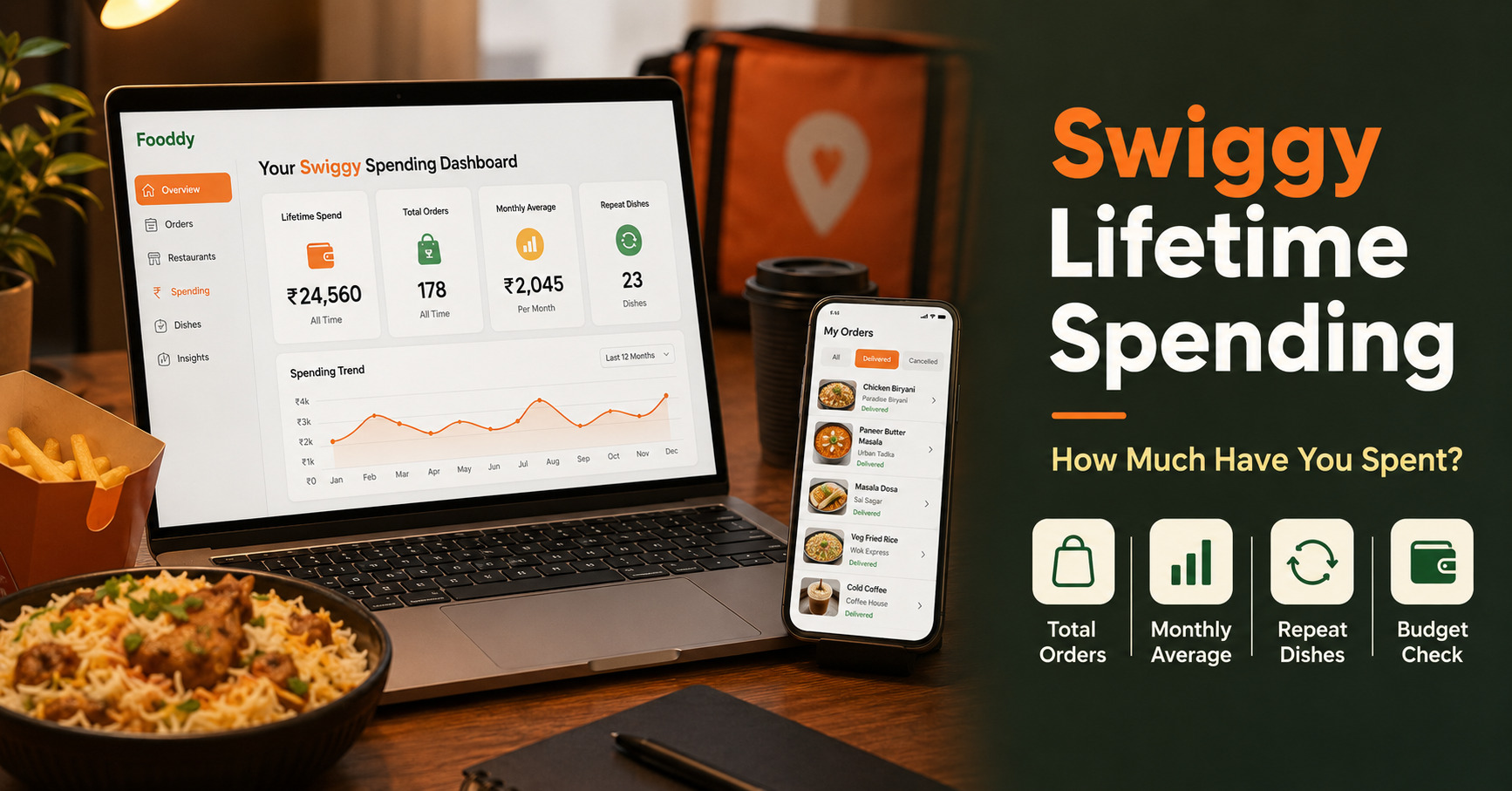
- Use Fooddy to check Swiggy spending faster.
- Use final paid amount, not only food price.
- Review delivery fees, taxes, platform charges, refunds, and group orders.
- Lifetime spend is interesting, but monthly average is better for budgeting.
What Is Swiggy Lifetime Spending?
Swiggy lifetime spending means the total money you have spent on Swiggy orders over your available order history.
It can include:
- Food orders
- Delivery fees
- Platform fees
- Taxes and packaging charges
- Tips, if added
- Cancelled or refunded orders, if they appear in order history
Simple meaning
Swiggy lifetime spend tells you the total cost of your food delivery habit, not just how many times you ordered.
How to Check Swiggy Lifetime Spending
Step 1: Log in to the right Swiggy account
Use the same number or email where you placed most of your orders.
Step 2: Open order history
Go to your past Swiggy orders and check whether older orders are visible.
Step 3: Load older orders
If old orders are missing, your lifetime total may look lower than actual spending.
Step 4: Use Fooddy
Fooddy helps calculate Swiggy spending faster so you do not need to add every bill manually.
Step 5: Check monthly average
After seeing the lifetime total, check monthly average. That number is more useful for real budget planning.
If you are checking from your phone, read Fooddy’s Swiggy spending calculator on mobile guide because mobile order history can be harder to load fully.
What Should You Include in Swiggy Lifetime Spend?
Use the final paid amount. Do not calculate only the menu price.
| Cost Item | Why It Matters |
|---|---|
| Food price | Base cost of your dish or combo. |
| Delivery fee | Small orders can become costly after delivery charges. |
| Platform fee | Looks small per order, but adds up over time. |
| Taxes and packaging | Final bill can be higher than the visible food price. |
| Tips | Optional, but still part of total money spent. |
| Refunds | Needed to understand actual net spend. |
Lifetime Spend vs Monthly Average: Which Number Matters More?
Lifetime spend is useful for curiosity. Monthly average is useful for budgeting.
| Metric | Best Use | Action |
|---|---|---|
| Lifetime spend | Understand total food delivery habit | Use it as a wake-up number |
| Monthly average | Plan food budget | Set weekly order limits |
| Average order value | Understand order size | Reduce add-ons and small fees |
| Order count | Understand frequency | Limit impulse orders |
Example: How Lifetime Spending Adds Up
- Average order value: ₹330
- Orders per month: 12
- Monthly spend: ₹3,960
- Yearly estimate: ₹47,520
- 3-year estimate: ₹1,42,560
This is why lifetime spend feels surprising. The problem is usually not one expensive order. It is repeated ordering over months and years.
Should You Compare Swiggy Lifetime Spending With Zomato?
Yes, if you use both apps.
- Swiggy may be your snack or quick-order app.
- Zomato may be your meal or restaurant app.
- One app may have more repeat dishes.
- One app may look cheaper but cost more after fees.
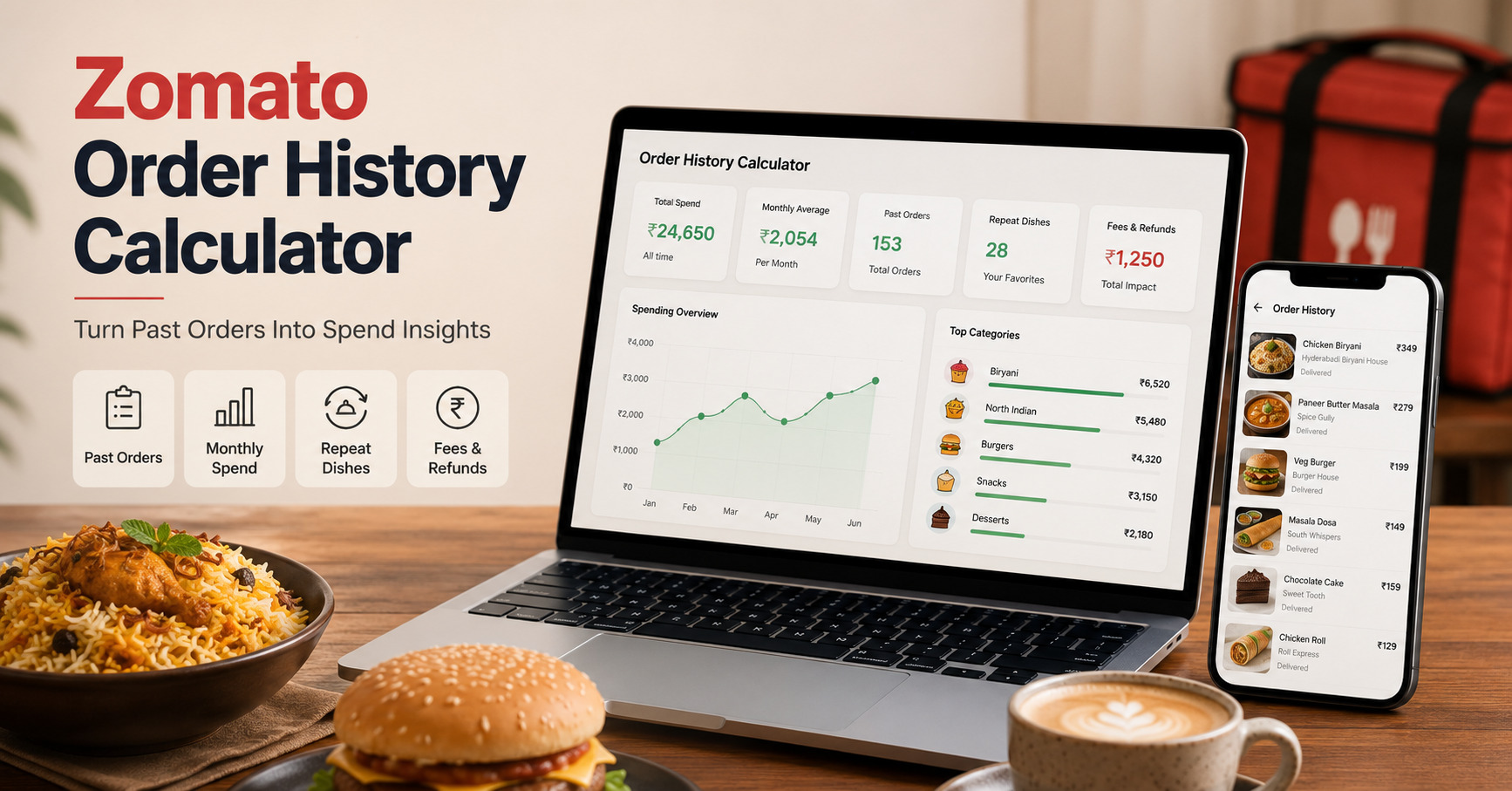
For Zomato checking, read Fooddy’s Zomato spending calculator on mobile guide.
Common Mistakes While Checking Swiggy Lifetime Spending
Mistake 1: Not loading old orders
If older orders are missing, your lifetime total will be incomplete.
Mistake 2: Using only food price
Final paid amount includes delivery fee, taxes, packaging, tips, and platform charges.
Mistake 3: Ignoring refunds
Cancelled or refunded orders can make your actual spend different from the order total.
Mistake 4: Counting group orders as personal spend
Hostel, office, or friend-group orders can make your personal food spending look higher.
Use Lifetime Spend as a Food Budget Audit
Once you know your Swiggy lifetime spending, use it properly.
- Check monthly average: This tells you your real food delivery habit.
- Find repeat dishes: Repeated cravings usually create the biggest cost.
- Set a weekly cap: Weekly limits are easier than monthly promises.
- Reduce small orders: Small orders often become costly after fees.
- Separate group orders: Don’t treat shared orders as personal spending.
For a deeper audit, read Fooddy’s calculate Swiggy spending guide.
How to Reduce Swiggy Spending Without Stopping Orders
- Plan fixed food delivery days.
- Check final bill before payment.
- Avoid ordering only because a coupon appears.
- Use tiffin or budget meals for daily food.
- Keep Swiggy for planned treats, not every meal.
- Compare monthly Swiggy and Zomato spending.
If delivery is becoming your regular meal source, compare it with Fooddy’s top tiffin services in Bangalore guide.
Use Fooddy to Check Your Swiggy Spending
Fooddy helps you calculate Swiggy and Zomato spending, review order patterns, and understand your food delivery habit without manual bill addition.
FAQs
What is Swiggy lifetime spending?
Swiggy lifetime spending is the total money you have spent on Swiggy orders over your available order history.
How can I check Swiggy lifetime spending?
Open Swiggy order history, load older orders, and use Fooddy to calculate spending faster without adding every bill manually.
Why is my Swiggy lifetime spending incomplete?
It may be incomplete if old orders are not loaded, you used another account, or some orders are missing from visible order history.
Should lifetime spend include delivery fees and taxes?
Yes. Use final paid amount because delivery fees, taxes, platform fees, packaging, and tips are part of your real food cost.
Is monthly average better than lifetime spend?
For budgeting, yes. Lifetime spend is interesting, but monthly average helps you control current food delivery habits.
Can Fooddy check Zomato spending too?
Yes. Fooddy is useful for checking spending across both Swiggy and Zomato.
Conclusion
Swiggy lifetime spending can be surprising because food delivery adds up slowly.
Use Fooddy to check your total spend, monthly average, order count, repeat dishes, fees, and refunds. Then turn that number into a practical food budget instead of just feeling shocked by the total.