A dish can be vegetarian and still contain ingredients your family avoids during Navratri. Even a simple aloo jeera might use regular table salt instead of sendha namak. And a restaurant’s “no onion, no garlic” label doesn’t necessarily mean its meal is suitable for a strict vrat.
During Shardiya Navratri 2026, from October 11 to October 20, many people observe a fast, prepare satvik meals or adjust their regular diet as part of family tradition.
If you’re cooking at home, you know exactly what goes into the food. Ordering is a little different.
Quick Answer: What Can You Eat During Navratri Fasting?
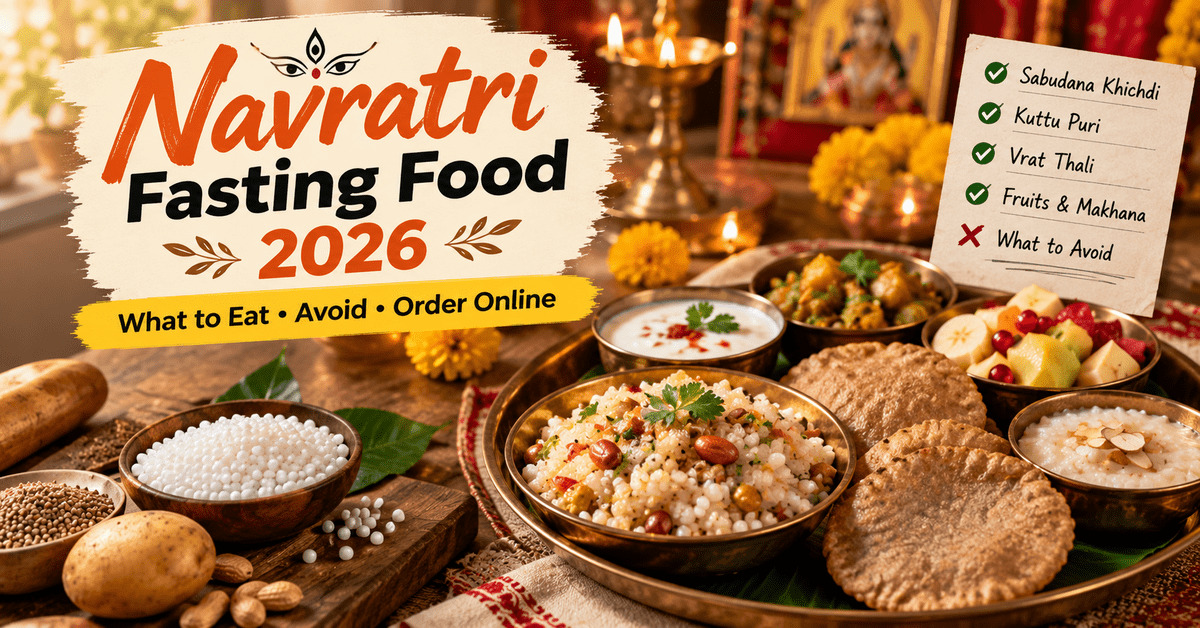
Common Navratri fasting foods include sabudana, kuttu atta, singhara atta, samak rice, potatoes, sweet potatoes, makhana, fruits, milk, curd, paneer and nuts. Many families use sendha namak instead of regular salt and avoid wheat, ordinary rice, pulses, onion and garlic. Rules differ by family and region, so confirm ingredients before ordering food.
Navratri Fasting Food List: What Can You Eat?
There isn’t one identical Navratri menu followed across India.
Some people eat one cooked meal in the evening. Others have fruit, milk and light meals during the day. Some families avoid salt altogether, while others use rock salt.
The table below covers foods commonly included in North Indian-style Navratri vrat meals. Follow your own household’s tradition if it differs.
| Food Category | Commonly Chosen Foods | Important Check |
|---|---|---|
| Fasting grains and flours | Kuttu, singhara, rajgira, samak rice | Check for wheat or regular flour mixtures |
| Sabudana | Sabudana khichdi, tikki, kheer | Check salt, seasoning and added flour |
| Vegetables | Potato, sweet potato, pumpkin, lauki | Allowed vegetables vary by tradition |
| Fruits | Banana, apple, papaya, pomegranate | Check sauces and packaged toppings |
| Dairy | Milk, curd, plain paneer | Check added ingredients and flavours |
| Nuts and seeds | Peanuts, almonds, cashews, makhana | Check seasoning and allergy information |
| Seasoning | Sendha namak, cumin, ginger, lemon | Follow your family’s spice and salt rules |
Notice that the name of the food is only half the answer. A kuttu puri made with buckwheat flour may suit your vrat, but one made with added wheat flour might not.
Foods to Avoid During Navratri Vrat
People following a typical grain-restricted Navratri fast often leave out everyday ingredients that appear in regular restaurant cooking.
| Usually Avoided | Where It May Be Hidden |
|---|---|
| Wheat, maida and regular rice | Roti, bread, noodles, coatings and flour blends |
| Regular table salt | Chutneys, spice mixes, raita and snacks |
| Onion and garlic | Gravy bases, chutneys and seasoning |
| Regular dals and pulses | Batters, mixed flours and some savoury snacks |
| Meat, fish and eggs | Non-vegetarian dishes and preparations |
| Packaged seasonings | Mixed masala, flavoured chips and ready-made sauces |
These aren’t universal religious rules for every community. They reflect commonly observed vrat practices. Some people follow a satvik vegetarian diet without restricting grains, while others follow stricter fasting customs.
One useful distinction: “Pure veg”, “satvik”, “no onion no garlic” and “vrat-friendly” do not mean exactly the same thing. Check the actual ingredient list rather than relying on the label alone.
10 Navratri Fasting Foods You Can Look for Online
If you’re ordering food during Navratri, you don’t have to limit yourself to a single thali every day. Here are ten commonly prepared fasting dishes worth searching for.
1. Sabudana Khichdi
A familiar option made using soaked tapioca pearls, peanuts, potatoes and seasoning.
It can work as breakfast or a light meal, depending on portion size. Ask whether the restaurant uses sendha namak and whether any regular spice mix has been added.
2. Kuttu Puri with Aloo Sabzi
Kuttu, or buckwheat, is commonly used in vrat flour preparations.
A plate of kuttu puri with potato curry is a popular fasting meal. But don’t assume the curry is automatically appropriate. Ask about the salt, gravy ingredients and cooking oil.
3. Samak Rice Khichdi or Pulao
Samak rice, also called vrat ke chawal or barnyard millet, is commonly used as an alternative to ordinary rice during fasting.
It’s a practical option when you want something resembling a rice-based meal. Check whether the dish contains vegetables and seasonings permitted in your household.
4. Sabudana Vada
Sabudana vada is a crisp snack commonly prepared with tapioca pearls, potato and peanuts.
It’s tempting to order several pieces, especially in the evening. Check whether the restaurant uses any binding flour and ask about frying practices if those matter to your fast.
5. Singhara Atta Puri or Roti
Singhara flour, made from water chestnut, is another common fasting flour.
It can be served with a mild potato or pumpkin preparation. Confirm whether the flour is pure singhara or mixed with regular atta.
6. Vrat-Friendly Paneer
Plain paneer can add variety to a fasting meal if dairy is allowed in your tradition.
However, ordinary paneer gravy often contains onion, garlic, flour or commercial seasoning. Look for a specifically prepared vrat version and confirm the ingredients.
7. Makhana with Curd
Roasted makhana with plain curd is useful when you don’t want another heavy meal.
For packaged makhana, check the flavouring and salt. Plain or specifically labelled fasting preparations are easier to assess than heavily seasoned versions.
8. Sweet Potato Chaat
Shakarkandi, or sweet potato, is commonly included in fasting meals.
A basic preparation with lemon, suitable spices and permitted salt can make a satisfying snack. Regular street-style chaat masala may not suit your fasting rules.
9. Fruit Bowl or Fruit Chaat
A freshly prepared fruit bowl is one of the simplest choices when you don’t have access to a fasting-special restaurant.
Choose plain cut fruit and ask for sauces, added spice mixes and sweetened toppings to be left out unless you know what’s in them.
10. Navratri Special Vrat Thali
A vrat thali can be convenient when you need a complete meal without placing several individual orders.
Depending on the restaurant, it may contain kuttu puri, sabudana, aloo sabzi, curd, pumpkin, a fasting dessert or samak rice.
But the contents aren’t standardized. One restaurant’s vrat thali may include ingredients another household avoids.
Always read the description before placing the order.
How to Order Navratri Fasting Food on Swiggy or Zomato
Food delivery apps can be helpful during a busy festival week, but finding the right meal may take a little more care than choosing a regular lunch.
Step 1: Search Using Specific Dish Names
Try searches such as:
- Navratri vrat thali
- Navratri fasting food
- Sabudana khichdi
- Kuttu puri
- Falahari food
- Vrat food near me
- Samak rice khichdi
Search results depend on your location, available restaurants and how the platform indexes menus.
Step 2: Read the Complete Menu Description
Don’t judge the meal only by the photograph.
A dish labelled “special Navratri thali” should ideally explain what comes in the meal and how the important fasting ingredients are handled.
For example, a publicly accessible Swiggy listing for Ghee and Turmeric in Noida describes a Navratri vrat thali containing dishes such as aloo sabzi, kaddu sabzi, sabudana khichdi and kuttu puri. Its listing also specifically mentions sendha namak.
That is a useful example of the kind of ingredient detail to look for. It does not guarantee the item is currently available for your address or suitable for every fasting tradition.
See the restaurant listing on Swiggy; app availability and exact listing URLs may change.
Step 3: Ask the Restaurant About Important Ingredients
Where the app provides an appropriate way to contact the restaurant, clarify your questions before ordering. An order note alone may not receive a reply.
For a strict fast, ask about:
- Sendha namak instead of ordinary salt
- Onion and garlic in the gravy or chutney
- Wheat flour mixed into kuttu or singhara preparations
- Ready-made masalas and sauces
- Shared utensils, pans or frying oil
Step 4: Check the Final Bill
A fasting thali that looks affordable on the menu may have delivery, packaging or other applicable charges at checkout.
Compare the final payable total, not only the food price.
If you order from Swiggy regularly, Fooddy’s Swiggy expense calculator guide explains how to review past delivery spending.
Before You Order: A Navratri Vrat Food Checklist
Here’s the simple test I would use before ordering a fasting meal.
Five Questions Worth Asking
- Is it a vrat meal or only vegetarian? These labels aren’t interchangeable.
- Which salt is used? Ask about sendha namak if your fast requires it.
- Does it contain ordinary flour, rice or dals? Check blended flours, coatings and gravies.
- How is it prepared? Ask about shared equipment or oil if your observance requires separation.
- What exactly is included? Check serving size, sides, sweets and the final price.
If the restaurant cannot confirm something important to your fast, choose a simpler meal from a provider you trust or prepare that meal at home.
Simple Navratri Fasting Meal Plan
You don’t need nine elaborate thalis to get through Navratri.
A little rotation between fruit, dairy, nuts, fasting grains and vegetables can make meals less repetitive. Your exact meal frequency should follow your fasting tradition and individual needs.
| Day | First Meal Idea | Main Meal Idea | Light Option |
|---|---|---|---|
| 1 | Fruit and curd | Sabudana khichdi | Roasted makhana |
| 2 | Banana and milk | Kuttu puri with aloo | Plain curd |
| 3 | Fruit bowl | Samak rice pulao | Peanuts if permitted |
| 4 | Milk and nuts | Singhara roti with pumpkin | Sweet potato |
| 5 | Fruit and yogurt | Vrat-friendly paneer with kuttu roti | Makhana |
| 6 | Banana and nuts | Sabudana khichdi with curd | Fresh fruit |
| 7 | Fruit bowl | Samak rice with vegetables | Milk if permitted |
| 8 | Curd and fruit | Vrat thali | Roasted makhana |
| 9 | Fruit or milk | Meal according to family vrat practice | As appropriate |
This is an illustrative meal-idea chart, not a prescribed diet or puja schedule. Portions, meal timing and permitted foods should reflect personal needs and family practices.
How to Eat More Comfortably During Navratri Fasting
For many people, the difficult part of a fast isn’t finding a dish they like. It’s managing long gaps between meals alongside work, travel and everyday responsibilities.
Planning helps. Keep permitted foods available, stay adequately hydrated if your observance allows it, and avoid relying entirely on fried snacks.
Nutrition advice published by The Indian Express emphasizes planning fasting meals with suitable fruits, vegetables, nuts, dairy and other permitted ingredients rather than focusing only on restrictions.
Chef Sanjeev Kapoor’s Navratri cooking coverage also offers a practical idea: simple preparations such as sabudana thalipeeth, vrat kadhi and lauki kheer can add variety without requiring an elaborate ingredient list.
See the Indian Express fasting nutrition discussion and Chef Sanjeev Kapoor’s Navratri food ideas.
Fasting isn’t a medically necessary detox. Nor is every vrat dish automatically light or nutritionally balanced.
If you are pregnant, have diabetes, take medication affected by food intake, or have another condition that makes fasting risky, get individualized medical advice before significantly changing your eating schedule.
Is Ordering Navratri Food More Expensive Than Cooking?
It depends on how many people you’re feeding, the ingredients you already have and the actual food delivery bill.
For one person working late, ordering a suitable thali may be convenient. For a family of four, cooking one shared meal at home may cost less than ordering separate portions.
But you need to compare actual costs.
For example, if a thali costs ₹250 and the final checkout total is ₹290, ordering it four times costs ₹1,160. That’s only an illustration, not a current market price.
The extra convenience might be worthwhile occasionally. Just make it a conscious choice.
You can use Fooddy’s food delivery spending calculator guide to understand how repeated orders add up over time.
Frequently Asked Questions About Navratri Fasting Food
1. What foods can you eat during Navratri fasting?
Common options include sabudana, kuttu, singhara, rajgira, samak rice, potatoes, sweet potatoes, fruits, curd, milk, nuts and makhana. The exact rules vary by household and region.
2. Can you order Navratri fasting food on Swiggy or Zomato?
You may find vrat thalis, sabudana khichdi, kuttu puri and other fasting dishes from restaurants serving your address. Availability varies, and you should verify ingredients before placing an order.
3. Is sabudana khichdi allowed during Navratri?
Sabudana khichdi is commonly eaten during Navratri fasting. Confirm its seasoning, salt, added flour and preparation if you’re following strict rules.
4. Can you eat normal rice during Navratri fasting?
Many Navratri fasting traditions avoid ordinary rice and instead use samak or barnyard millet. However, customs differ, so follow your family’s practice.
5. Is paneer allowed during Navratri vrat?
Plain paneer is commonly included where dairy is permitted. Restaurant paneer gravies may contain ingredients that are not suitable for a particular fast.
6. Is a no-onion-no-garlic meal suitable for Navratri fasting?
Not automatically. A dish without onion and garlic may still contain wheat, regular rice, table salt or other ingredients avoided during vrat.
7. What is the easiest fasting food to order?
Plain fruit, curd or a clearly described fasting-special dish may be easier to assess than a complex restaurant gravy. Choose according to your fasting rules and confirm preparation details where needed.
8. When is Shardiya Navratri in 2026?
Shardiya Navratri begins October 11, 2026, and concludes with Vijayadashami on October 20, 2026. Specific puja observances can depend on local panchang timings.
The Bottom Line
Navratri fasting food doesn’t have to mean eating the same potato dish for nine days.
Sabudana, kuttu, singhara, samak rice, makhana, fruit and dairy offer plenty of possibilities, depending on the traditions you follow.
If you’re ordering food, pay more attention to ingredients than labels. A dish looking satvik isn’t enough, and a “Navratri special” tag cannot answer every question about how it was prepared.
Find a meal that suits your family’s rules, confirm the details that matter and check the final bill. That’s a more dependable approach than choosing something simply because it appears under a festival banner.
Keep Your Food Delivery Spending in Check
Festival orders, office lunches and occasional snacks can add up. Fooddy helps you review Zomato and Swiggy spending so you can better understand your ordering habits.
Explore Fooddy’s Spending Calculator
Fooddy analyzes supported Zomato and Swiggy order histories. It does not verify whether restaurant meals meet religious fasting requirements.