Quick Answer: What Food Is Prepared for Kanya Pujan?
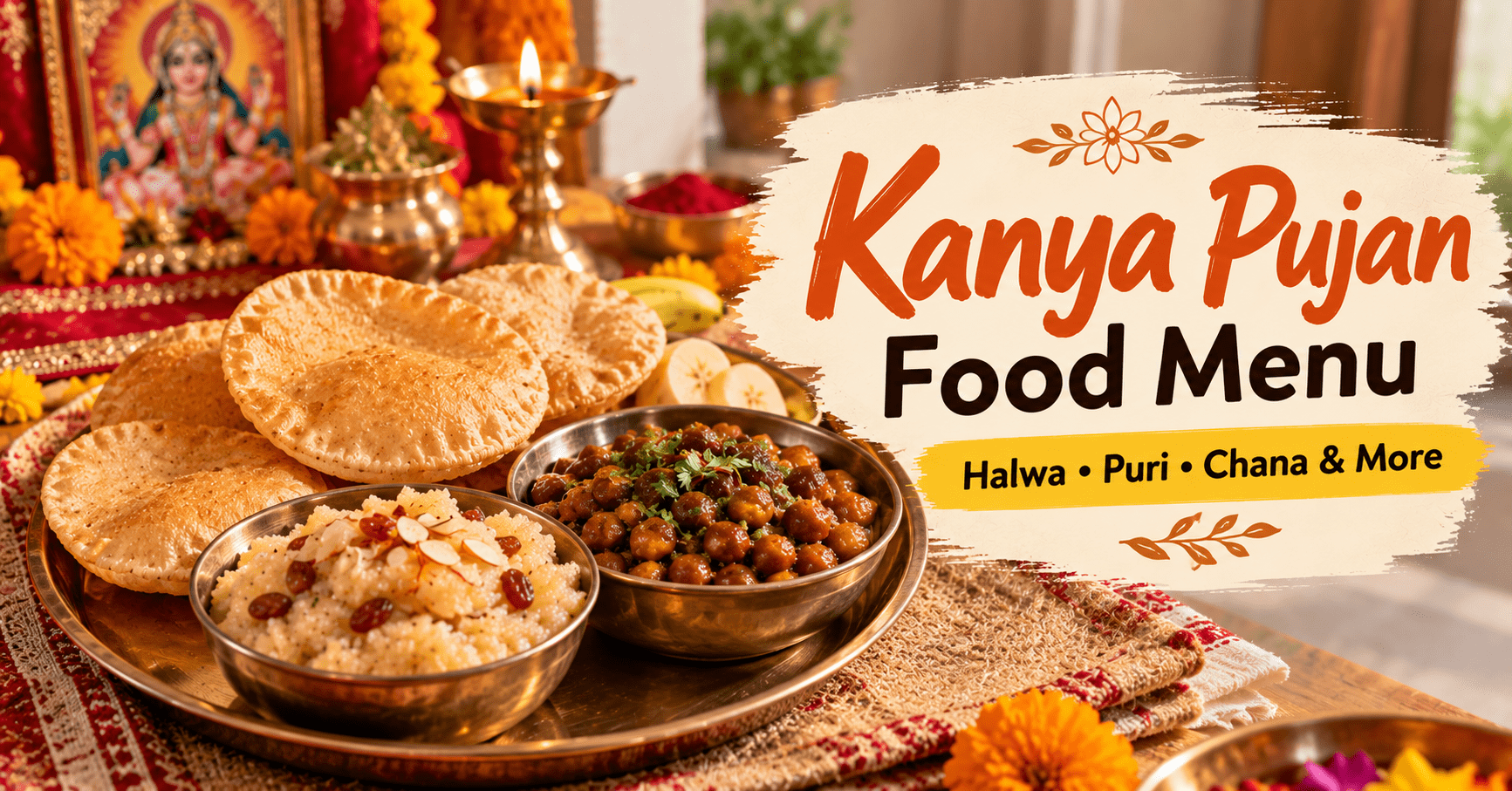
The traditional Kanya Pujan prasad in many North Indian households includes suji halwa, puri and sookhe kale chane. This meal is commonly offered during Ashtami or Navami and served to invited young girls as part of Kanjak Puja. Families may also include aloo sabzi, fruit or sweets. The exact menu depends on household tradition.
Kanya Pujan 2026 Date: Ashtami or Navami?
Kanya Pujan, also called Kanjak or Kumari Puja in different regions, is commonly observed during Durga Ashtami or Maha Navami.
According to the 2026 Shardiya Navratri calendar published by Drik Panchang, important Ashtami and Maha Navami observances occur on October 19, with Navami-related rituals and Vijayadashami on October 20.
Some families perform Kanya Pujan on Ashtami, others on Navami. Follow the tradition and local panchang used in your home when deciding the puja day and timing.
Traditional Kanya Pujan Food Menu
You don’t need an elaborate feast for Kanjak Puja. In many homes, the familiar combination of halwa, puri and chana is the heart of the meal.
| Food | Role in the Menu | Preparation Tip |
|---|---|---|
| Suji Halwa | Sweet prasad | Roast the suji carefully for a good aroma |
| Puri | Main accompaniment | Fry close to serving time |
| Kala Chana | Savoury prasad | Soak the chickpeas the night before |
| Aloo Sabzi | Optional side dish | Keep the preparation mild if serving children |
| Banana or seasonal fruit | Optional addition | Wash and portion before serving |
| Other sweets | Optional family custom | Choose easy-to-serve portions |
One important distinction: this traditional prasad menu is not automatically the same as a grain-restricted fasting meal.
Suji is made from wheat, puris commonly use wheat flour, and chana is a pulse. People observing strict Navratri fasting may avoid some of these ingredients until their fast is completed.
If you’re unsure about the difference, read our guide to planning and managing food delivery costs for food budgeting, and follow your household’s religious guidance for fasting ingredients.
How Much Food Should You Prepare for 9 Girls?
Let’s make the preparation a little easier.
These are practical starting estimates for nine children, not religiously prescribed quantities. Actual portions depend on the children’s ages, appetites and whether family members will also eat the prasad.
| Ingredient | Suggested Quantity for 9 Girls | Use |
|---|---|---|
| Suji / semolina | 200–250 g | Halwa |
| Sugar | 150–200 g, adjust to taste | Halwa |
| Ghee | 100–125 g | Halwa |
| Water or milk | As required by recipe | Halwa |
| Wheat atta | 450–550 g | Approximately 18–27 small puris |
| Dry kala chana | 300–350 g | Dry chana preparation |
| Oil | Enough for frying | Puris |
| Spices and salt | As preferred | Chana |
| Fruit | 9 small portions, optional | Additional offering |
These are planning estimates. Puri yield depends on the size and thickness of the dough portions. Cooking oil required for deep-frying is different from the amount absorbed by the food.
For younger children, start with smaller servings and offer more if they’d like it. This is more comfortable than placing an oversized plate in front of every child.
What if You’re Preparing Food for Family Members Too?
Don’t simply double every ingredient without counting who will eat.
For example, if nine girls and six family members are expected, you’re planning for around 15 people. Adult portions may be larger, so prepare additional dough and chana according to the guests’ preferences.
If you’re unsure how much will be needed, keep some extra dough ready rather than frying all the puris in advance.
How to Make Suji Halwa for Kanya Pujan
Halwa sounds simple, but the roasting makes a big difference. If the suji isn’t cooked properly, the flavour can taste raw even after the sugar is added.
Ingredients
- 1 cup suji (approximately 160–180 g)
- ½–¾ cup sugar, according to taste
- ⅓–½ cup ghee
- About 2½–3 cups water
- Cardamom, optional
- Chopped dry fruits, optional
Method
- Heat the ghee in a heavy-bottomed pan.
- Add suji and roast on low to medium heat, stirring regularly.
- Continue until the suji develops a pleasant roasted aroma and light golden colour.
- Carefully add hot water a little at a time, stirring to prevent lumps and splashing.
- Allow the mixture to thicken, then add the sugar.
- Stir until the halwa reaches a soft, spoonable consistency.
- Add cardamom or dry fruits if these suit your family tradition.
Halwa thickens as it cools. If you’re preparing it a little ahead of time, keep that in mind rather than cooking it completely dry.
How to Prepare Sookhe Kale Chane
Dry kala chana is one of the easiest parts of the Kanya Pujan menu to prepare ahead. The only thing you shouldn’t leave until the last minute is soaking it.
Ingredients
- 300–350 g dry kala chana
- 1–2 tablespoons oil or ghee
- Cumin seeds
- Turmeric, if permitted by family tradition
- Salt and spices according to custom
- Water for soaking and cooking
Method
- Rinse the kala chana thoroughly.
- Soak in plenty of clean water overnight, preferably around 8–12 hours.
- Drain, rinse and pressure-cook with fresh water until fully tender.
- Heat oil or ghee in a pan and add cumin seeds.
- Add the cooked chana, salt and permitted spices.
- Cook until the seasoning coats the chickpeas and excess moisture reduces.
- Taste for seasoning and ensure the chickpeas are soft enough to eat comfortably.
Some households prepare the chana with very little seasoning. Others add ginger, amchur or a little chilli.
There isn’t one universal recipe. The version followed in your home is what matters.
How to Make Soft, Puffy Puris for Kanjak
Puris are best when they’re freshly fried. Making them several hours in advance can leave them chewy or oily.
Ingredients
- 450–550 g wheat atta for approximately 18–27 small puris
- Water to knead
- A little oil, optional
- Oil for frying
Method
- Add water gradually to the atta and knead into a firm, smooth dough.
- Let the dough rest for about 15–20 minutes.
- Divide it into small, even portions.
- Roll each portion without making it excessively thin.
- Heat sufficient oil and test it with a small piece of dough.
- Fry each puri, turning as needed, until puffed and cooked through.
- Drain and serve while warm.
Don’t overcrowd the pan. Frying too many puris at once can lower the oil temperature and lead to uneven cooking.
What Else Can You Add to the Kanya Pujan Menu?
Halwa, puri and chana are the traditional centre of many Kanjak meals, but families sometimes include other foods.
Here are a few options:
- Aloo sabzi: A mild potato preparation that pairs well with puri.
- Banana: Easy to portion and serve.
- Seasonal fruit: A simple additional item for the plate.
- Kheer: Prepared in some households as an additional sweet.
- Homemade laddoo: Useful if your family normally includes an extra sweet.
Extra dishes aren’t necessary just to make the meal look more elaborate. A smaller menu prepared carefully is often easier to serve fresh.
Kanya Pujan Preparation Timeline: The Night Before to Serving
The biggest advantage of planning ahead is that you won’t be trying to cook three different things at once while guests are arriving.
| When | What to Do |
|---|---|
| Previous evening | Wash and soak kala chana; check ingredients and serving plates |
| Early morning | Cook the soaked chana and prepare the dry seasoning |
| Before the planned puja | Prepare halwa and knead the puri dough |
| Close to serving | Fry the puris and portion the food |
| During serving | Offer modest portions first; serve additional food as requested |
| After the meal | Refrigerate suitable leftovers promptly and clean the preparation area |
This timeline is flexible. Coordinate the cooking around the puja schedule followed in your home.
Can You Order Kanya Pujan Food Online?
Possibly, depending on your location and the restaurants offering festival meals.
Some sweet shops, caterers and restaurants may offer halwa-puri-chana combinations or Navratri special thalis. But don’t assume that a standard restaurant thali meets your Kanya Pujan requirements.
If you’re considering ordering, ask:
- Does the meal contain halwa, puri and kala chana?
- Is the food prepared according to the ingredients required by your family?
- Will it arrive before your planned serving time?
- What is the portion size?
- Are there additional delivery or packaging charges?
- Can the restaurant accommodate food-allergy concerns?
For a religious offering where preparation conditions matter, home cooking or a trusted provider may be preferable if a restaurant cannot confirm the ingredients.
If you frequently order festival meals, you can use Fooddy’s food delivery spending calculator guide to understand how repeated orders affect your food budget.
Common Kanya Pujan Cooking Mistakes to Avoid
1. Forgetting to Soak the Chana
Dry chickpeas need time to hydrate. Soaking them ahead helps with even cooking, though they still need to be thoroughly cooked.
2. Frying Every Puri Too Early
Keep the dough ready, but fry puris in smaller batches close to serving when practical.
3. Making Oversized Portions
Children may eat less than adults. Offer smaller portions first, with seconds available.
4. Forgetting About Allergies
Halwa may contain wheat, dairy and nuts; chana is a legume. Ask parents about allergies or dietary restrictions and avoid ingredients that could cause problems.
5. Leaving Cooked Food Out Too Long
Prepare and serve food hygienically. Keep hot foods properly hot, refrigerate perishable leftovers promptly and avoid leaving cooked food at room temperature for extended periods.
Quick Shopping Checklist for Kanya Pujan
Before You Start Cooking
- ☐ Suji and sugar for halwa
- ☐ Ghee
- ☐ Wheat flour for puris
- ☐ Dry kala chana, soaked in advance
- ☐ Cooking oil
- ☐ Permitted spices and salt
- ☐ Optional fruits and sweets
- ☐ Clean drinking water
- ☐ Clean plates, bowls and serving spoons
- ☐ Appropriate serving portions for children
Frequently Asked Questions
1. What is the traditional Kanya Pujan food menu?
In many North Indian households, the traditional menu is suji halwa, puri and dry kala chana. Families may add aloo sabzi, fruit or other offerings according to their customs.
2. How many puris should I make for 9 girls?
For planning purposes, approximately 18–27 small puris may be a reasonable starting point, depending on age and appetite. Offer smaller portions first and keep additional food ready.
3. What is the Kanya Pujan date in 2026?
Important Shardiya Navratri Ashtami and Navami observances occur around October 19–20, 2026. Kanya Pujan timing depends on your family’s tradition and local panchang.
4. Can you prepare Kanya Pujan chana the night before?
You can soak the chana the previous evening. If preparing the cooked dish in advance, cool it safely, refrigerate promptly and reheat thoroughly before serving.
5. Can Kanya Pujan food include aloo sabzi?
Yes, some families include aloo sabzi with halwa, puri and chana. It is an optional addition rather than a universal requirement.
6. Is Kanya Pujan prasad the same as Navratri fasting food?
Not necessarily. Traditional halwa, wheat puris and kala chana may contain ingredients avoided in some strict Navratri fasts. The meal and fasting rules should be considered separately.
7. Can I buy Kanya Pujan food from a restaurant?
Some restaurants or caterers may offer festival thalis or prasad combinations. Verify ingredients, preparation, portion size and delivery timing before ordering.
Final Thoughts
The Kanya Pujan food menu doesn’t have to be complicated.
For many families, halwa, puri and kala chana are enough to make a familiar, meaningful meal. Preparing the chickpeas ahead, estimating portions realistically and frying puris close to serving can make the morning much easier.
Keep your family’s traditions at the centre of the preparation. Make food that children can comfortably enjoy, serve it fresh, and don’t feel the need to add unnecessary dishes.
Sometimes a simple plate of homemade halwa, puri and chana is exactly what everyone looks forward to.
Planning Your Festival Food Budget?
Whether you’re preparing meals at home or ordering occasionally, it helps to understand how much you spend on food. Fooddy helps analyze supported Zomato and Swiggy order histories so you can review your food delivery habits.