
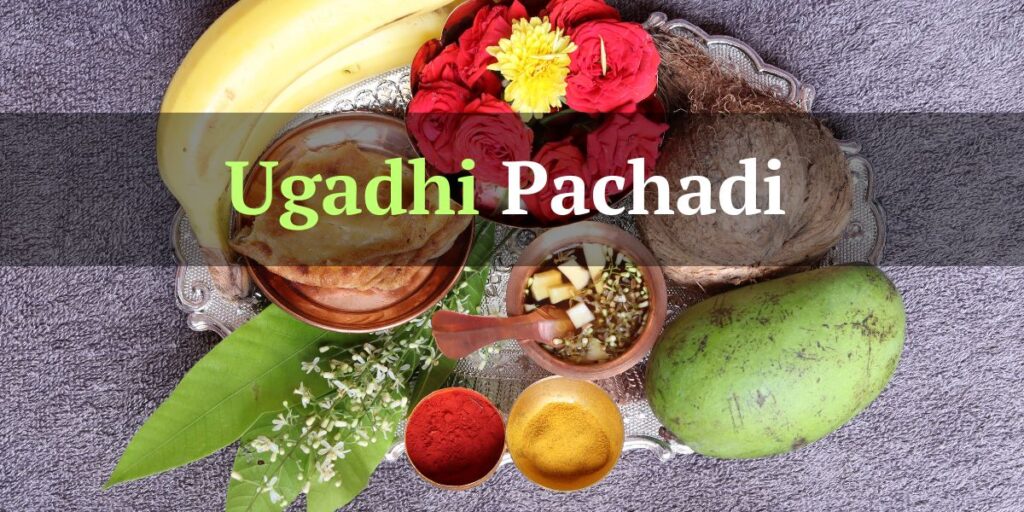
The ugadi pachadi significance comes from its symbolic message. Every flavor in the dish stands for a different human feeling or phase of life. When families taste all six flavors together, they begin the year by acknowledging that life is a mix of emotions.
- This tradition carries a simple but powerful lesson: happiness alone does not define life. Growth also comes from struggle, change, uncertainty, and resilience.
- That is why Ugadi Pachadi remains one of the most meaningful dishes prepared during the festival. It connects food, philosophy, and culture in a single serving.
Ugadi Pachadi Ingredients
The ugadi pachadi ingredients are simple, but each one has symbolic importance. Most families prepare the dish using fresh seasonal ingredients available during spring.
The common ingredients of ugadi pachadi are:
- Neem flowers
- Raw mango
- Tamarind pulp
- Jaggery
- Green chilli or black pepper
- Salt
These ingredients are mixed with water to make a thin, chutney-like preparation. The final taste should feel balanced rather than heavily sweet or sour.
One reason this dish remains special is that it uses ingredients that naturally appear during the Ugadi season. That seasonal connection adds another layer of meaning to the festival.
Also Read – Ugadi Special Dishes in Telangana
Ugadi Pachadi 6 Tastes Explained
The idea of ugadi pachadi 6 tastes is the heart of the dish. Each taste stands for a different life experience, and together they reflect the emotional journey of the year ahead.
Here is the symbolic meaning of each taste
| Taste | Ingredient |
What It Represents
|
| Sweet | Jaggery |
Happiness and joy
|
| Sour | Tamarind |
Surprises and unexpected events
|
| Bitter | Neem flowers |
Challenges and sadness
|
| Spicy | Green chilli |
Anger, energy, or intensity
|
| Salty | Salt |
Interest and flavor in life
|
| Tangy | Raw mango |
Newness and unpredictability
|
Many people search for ugadi pachadi 6 tastes in english because they want to understand not just the ingredients, but the message behind them. The six tastes are not random. They are a symbolic way of saying that every year brings a complete range of emotions.
How Many Tastes in Ugadi Pachadi?
A common question during the festival is how many tastes in ugadi pachadi.
The answer is six.
These six tastes are
- Sweet
- Sour
- Bitter
- Spicy
- Salty
- Tangy
Together they form a complete sensory and symbolic experience. That is why the dish is not treated like an ordinary festive side item. It is seen as a spiritual and emotional beginning to the new year.
Why Ugadi Pachadi Is Prepared First
Ugadi Pachadi is often prepared early in the morning before the rest of the festive lunch begins. Families taste it first because the dish sets the emotional and spiritual tone for the day.
This tradition reflects an important cultural idea: the new year should begin with acceptance, awareness, and gratitude. By tasting all six flavors together, people remind themselves that they should face every experience in the coming year with balance.
This is one reason ugadi pachadi remains such a memorable part of the celebration. It turns a simple food preparation into a meaningful ritual.
How to Make Ugadhi Pachadi at Home
Making Ugadhi Pachadi at home is easy because it does not require long cooking or complicated techniques. The focus is on combining the ingredients in the right balance.
Basic Method
- Soak tamarind in water and extract the pulp.
- Add grated or finely chopped raw mango.
- Mix in jaggery until it dissolves.
- Add neem flowers.
- Add finely chopped green chilli or a little crushed pepper.
- Add salt and stir well.
- Adjust the consistency with water if needed.
The final mixture should taste layered, not one-dimensional. Sweetness should not overpower bitterness, and sourness should not hide the raw mango flavor. A well-made pachadi feels balanced, symbolic, and refreshing.
Why Neem and Raw Mango Matter So Much
Two ingredients define this dish more than any others: neem flowers and raw mango.
- Neem flowers bring bitterness, which symbolizes life’s difficult phases. Raw mango adds tanginess and freshness, which represent change and new beginnings. Together they give Ugadhi Pachadi its seasonal and symbolic identity.
- Without these ingredients, the preparation may still taste pleasant, but it loses much of its traditional meaning. That is why families try to use fresh seasonal produce when possible.
Cultural Importance of Ugadi Pachadi
Ugadi is celebrated across Karnataka, Andhra Pradesh, and Telangana, and the dish plays a central role in many homes. After ritual cleaning, decorating entrances with mango leaves, and drawing rangoli, families prepare pachadi as part of the day’s first offerings and meals.
The dish stands out because it blends:
- festival food
- family tradition
- seasonal ingredients
- symbolic meaning
- spiritual reflection
This cultural depth explains why the recipe continues to stay relevant across generations. Younger people may search for recipes online, but the emotional meaning remains unchanged.
Ugadi Pachadi and Seasonal Food Wisdom
Traditional Indian festivals often align with the seasonal cycle, and Ugadi Pachadi is a perfect example of that wisdom. Spring brings fresh raw mango and neem blossoms, both of which become central to the festival menu.
- Seasonal eating has always been part of Indian food culture. Festivals did not just celebrate tradition; they also made use of what nature provided at the right time. Ugadi Pachadi reflects that connection beautifully.
- This is one reason the dish feels both festive and practical. It is rooted in culture, but it is also closely linked to natural seasonal rhythms.
Why This Dish Is Still Relevant Today
Modern food trends change quickly, but symbolic festival dishes continue to hold value because they carry identity and memory. Ugadhi Pachadi remains relevant because it offers more than taste. It offers a message that still feels meaningful today.
- In a fast-moving world, the dish reminds people to accept every phase of life with patience and perspective. That timeless message is what keeps the recipe alive year after year.
- Whether someone prepares it from a grandmother’s method or learns it online for the first time, the dish continues to connect people to tradition.
Final Thoughts
Ugadhi Pachadi is one of the most meaningful festival preparations in South Indian culture. It is simple in ingredients but rich in symbolism, tradition, and emotional depth. Every element in the dish serves a purpose, and every flavor carries a message.
- From the six tastes to the seasonal ingredients, this preparation reflects the spirit of Ugadi itself: a new beginning that welcomes every kind of experience.
- If you want to understand the festival through food, Ugadhi Pachadi is the best place to start.