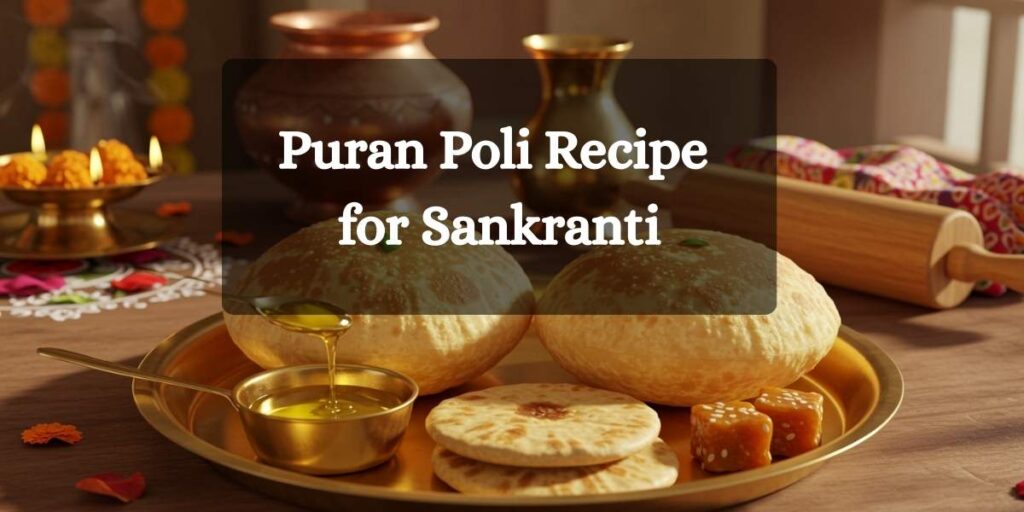
Sankranti in Maharashtra isn’t just a date on the calendar—it’s that cozy festival feeling of sunshine, sesame sweets, and a kitchen that smells like ghee. If you want one traditional sweet dish that feels instantly festive, Puran Poli is the perfect pick. If Sankranti in your home means sweet aromas, warm ghee, and festive food, this Puran Poli Recipe for Sankranti is the perfect traditional treat to make. In Maharashtrian homes, puran poli is a soft, thin poli stuffed with a rich, jaggery-heavy chana dal filling and lightly scented with cardamom (and sometimes nutmeg). It’s comforting, celebration-worthy, and surprisingly doable at home when you follow the right texture checks for puran and dough.
In simple words, puran poli is a soft, thin flatbread (poli) stuffed with a sweet lentil filling (puran). In the Maharashtrian classic version, the puran is jaggery-forward, which gives it that deep, rich sweetness that people associate with Sankranti meals..
Puran Poli Recipe in Short
If you’re in a hurry and want the entire process in one quick view, this section is your shortcut. You can read it once, then scroll down to the step-by-step method for exact tips and texture checks.
- Cook & drain chana dal until soft
- Cook dal + jaggery until thick and smooth (this is the puran)
- Knead a soft dough, then rest it
- Stuff, roll gently, roast with ghee
- Serve hot (extra ghee is the whole point!)
Recipe of Puran Poli in English
This recipe card gives you a practical overview of how long it takes, how many polys you’ll get, and what to expect. It’s useful if you’re planning Sankranti cooking around other dishes.
| Item | Details |
| Prep time | 25 minutes |
| Cook time | 35–45 minutes |
| Rest time | 30–60 minutes |
| Total time | ~1 hour 30 minutes |
| Yield | 10–12 medium puran polis |
| Style | Maharashtrian classic (jaggery-heavy) |
Puran Poli Recipe for Sankranti Ingredients (Jaggery-Heavy)
Before you start cooking, keep everything ready. Puran poli becomes much easier when you don’t have to stop in between to measure ingredients. Also, Sankranti cooking feels smoother when the kitchen setup is sorted first.
For Puran (Stuffing)
- 1 cup chana dal (split Bengal gram)
- 1 to 1¼ cups jaggery (grated) (this is the jaggery-heavy part)
- ½ tsp cardamom powder
- ¼ tsp nutmeg powder (optional, but very traditional)
- 1–2 tbsp ghee
- Pinch of salt
- Optional: ½ tsp fennel powder (adds a warm, festive aroma)
Also Read – Sakinalu Recipe
For Poli (Outer Dough)
- 2 cups wheat flour (atta)
- ½ cup maida (optional; helps you roll thinner and keeps poli softer)
- 2 tbsp oil or ghee
- ¼ tsp turmeric (optional)
- ¼ tsp salt
- Water as needed (warm water recommended)
Note: You can make it with 100% wheat flour too. If you do that, keep the dough extra soft and don’t skip the resting step.
Puran Poli Recipe for Sankranti Step by Step
This section breaks down the recipe into clear steps, allowing you to cook with confidence. The key idea is simple: make thick puran, soft dough, and roast gently with ghee.
Step 1 – Cook Chana Dal
This step matters because the dal texture decides whether your stuffing will become smooth or grainy. You want dal that’s fully cooked and mashable, but not swimming in water.
- Wash chana dal 2–3 times.
- Pressure cook with enough water until the dal is soft (it should mash easily).
- Drain the dal completely and let it sit in the strainer for 10 minutes.
✅ Why draining is important:
If dal holds extra water, your puran becomes sticky, and sticky puran is the main reason polis tear or leak while rolling.
Step 2 – Make Jaggery-Heavy Puran
This is the heart of the recipe. Puran should taste deep and festive—sweet, slightly earthy from dal, and beautifully aromatic from cardamom and nutmeg.
- Add drained dal and jaggery to a heavy pan.
- Cook on low–medium heat, stirring often.
- At first, it will become loose because jaggery melts—keep cooking.
- Continue until it turns thick and starts leaving the sides of the pan.
- Add ghee, cardamom powder, nutmeg, and a pinch of salt.
- Cook 2 minutes more, then cool completely.
- Mash very well (or blend lightly) to make it smooth.
Puran Consistency Check
You’ll know puran is perfect when:
- It forms a soft ball,
- it doesn’t feel wet,
- and it doesn’t stick heavily to your fingers.
Fix if needed:
- If it’s sticky → cook longer, cool again
- If it’s too dry → add 1 tsp ghee and mash
Step 3 – Make the Dough
The dough isn’t just a covering—it decides how soft your poli feels when you bite it. A soft, rested dough also makes rolling much easier.
- Mix wheat flour (+ maida), salt, and turmeric (optional).
- Add oil/ghee and rub it into the flour.
- Add warm water slowly and knead into a soft, smooth dough.
- Knead 6–8 minutes until elastic.
- Cover and rest for 30–60 minutes.
Dough Texture Goal
- Softer than chapati dough
- Smooth and pliable
- Not wet or sticky
If it feels tight after resting, knead in 1–2 tsp water and rest again for 10 minutes.
Step 4 – Stuff & Seal
Stuffing is where you build the poli. If sealing is done properly, rolling becomes stress-free. If sealing is weak, puran will escape, and the poli will tear.
- Divide the dough into equal balls.
- Divide puran into slightly smaller balls.
- Flatten one dough ball, keep edges thinner.
- Place puran in the center.
- Bring edges together and seal neatly.
- Smooth into a round ball.
Small tip: Don’t trap air inside. A tight seal gives you a cleaner roll.
Step 5 – Roll Thin
Rolling puran poli is different from rolling chapati—here you have a soft filling inside. The goal is to roll thin with patience, not pressure.
- Lightly dust the stuffed ball in flour.
- Place seam side down.
- Roll gently from the center outward.
- Rotate after every 1–2 rolls.
Rolling Tips
- Use gentle pressure and keep rotating
- Avoid too much dry flour (it makes poli dry)
- If you see a crack, pinch and seal immediately
- Start slightly thicker if you’re a beginner—thin comes naturally after 2–3 polis
Step 6 – Roast on Tawa With Ghee
Roasting is where puran poli becomes truly delicious. Ghee is not optional here—it’s what gives softness, shine, and that festival aroma.
- Heat a tawa on a medium flame.
- Place the poli and cook until small bubbles appear.
- Flip and apply ghee.
- Flip again, apply a little more ghee.
- Roast until light golden spots appear.
✅ Important: Don’t over-roast. Too much roasting dries it out.
Puran Poli Recipe With Sugar
Some people prefer sugar, or they don’t have jaggery at home. This alternative exists, but since you want the Maharashtrian classic, think of this as a backup option.
- Replace jaggery with ¾ cup sugar for 1 cup of dal
- Cook the same way until thick
- Add cardamom and nutmeg at the end for aroma
10 Lines on Puran Poli
This section is useful if you want a short intro, snippet, or quick facts in your blog.
- Puran poli is a traditional sweet stuffed flatbread.
- The stuffing is called puran and is made from cooked chana dal.
- Jaggery is used to create a rich, festive sweetness.
- Cardamom gives puran poli its signature aroma.
- Nutmeg is often added in Maharashtrian homes for a classic taste.
- The outer dough is made from wheat flour and rested for softness.
- Puran poli is rolled thin and roasted on a tawa.
- Ghee makes it soft, rich, and flavorful.
- It tastes best hot and fresh.
- It’s a popular choice for Sankranti meals and celebrations.
Serving Ideas
Puran poli can be served in different ways depending on your family style. This section helps readers choose what feels best for them.
- Classic: Hot puran poli with ghee on top
- Comfort style: With warm milk
- Festive plate: Alongside other dishes for a full Sankranti meal
- Kid-friendly: Cut into triangles like sweet bites
Common Mistakes & Quick Fixes
If this is your first time, don’t worry—most issues have simple fixes. This section helps you recover quickly without starting over.
Puran leaks while rolling
Cause: puran too wet
Fix: cook longer until thick and cool fully
Poli turns hard
Cause: dough stiff or overcooked
Fix: softer dough + medium flame + ghee while roasting
Poli tears while rolling
Cause: seal weak or dough too tight
Fix: seal better, rest dough longer, roll gently
Poli feels thick
Cause: pressure too heavy
Fix: lighter hands + more rotation while rolling
Make-Ahead Plan for Sankranti
This is for people who want Sankranti cooking to feel easy. When you prep a little earlier, the festival day becomes smoother.
Night before
- Cook and drain the dal
- Grate jaggery and keep spices ready
- Knead dough and keep covered (or refrigerate)
Sankranti morning
- Cook puran (10–15 minutes)
- Roll and roast (20–30 minutes)
- Serve hot with ghee
Puran Poli Price
Many people search for “puran poli price” when deciding whether to buy or make it. This table helps set expectations.
| Type | Typical Price Range (India) |
| Local sweet shop (per piece) | ₹30–₹80 |
| Premium handmade packs (2 pieces) | ₹150–₹400 |
| Online packs (6–10 pieces) | ₹250–₹600 |
| Restaurant dessert serving | ₹120–₹250 |
Conclusion for Puran Poli Recipe for Sankranti
This Maharashtrian jaggery-heavy puran poli recipe for Sankranti is all about balance: thickholes, thick puran, soft dough, gentle rolling, and ghee at the right time. Once you get the first two polis right, the rest become easy—and the taste is exactly what Sankranti should feel like: warm, festive, and satisfying.
This Puran Poli Recipe is all about getting three things right: thick, jaggery-rich puran, soft rested dough, and gentle roasting with ghee. Once you nail the first couple of polis, the rest becomes easy and genuinely enjoyable. Serve it hot with a glossy ghee finish, and you’ll have a Sankranti sweet that tastes festive, comforting, and completely homemade