Mumbai is India’s most commercially dynamic food market. From suburban family restaurants to high-end fine dining hubs, the city’s restaurant ecosystem reflects its population density, economic activity, and evolving consumer preferences, making Mumbai restaurants statistics essential for anyone trying to understand how this market is structured.
If you’re looking for data-backed insights about the number of restaurants in Mumbai, this report breaks down area distribution, cuisine dominance, industry valuation, and emerging trends shaping the city’s food landscape in 2026.
Total Number of Restaurants in Mumbai
The most searched question remains: how many restaurants are there in Mumbai?
Industry-level estimates indicate that Mumbai has 140,000+ food establishments across organised and unorganised sectors combined. This includes dine-in restaurants, cafés, QSRs, delivery kitchens, and standalone food outlets.
However, the total restaurants in Mumbai depends on how the count is measured:
- Organised, registered restaurants
- Unorganised local establishments
- Platform-listed restaurants
- Delivery-only operations
This explains why the total number of restaurants in Mumbai may vary across reports.
Related – Kolkata Restaurants Statistics
Mumbai Restaurants Statistics Area-Wise
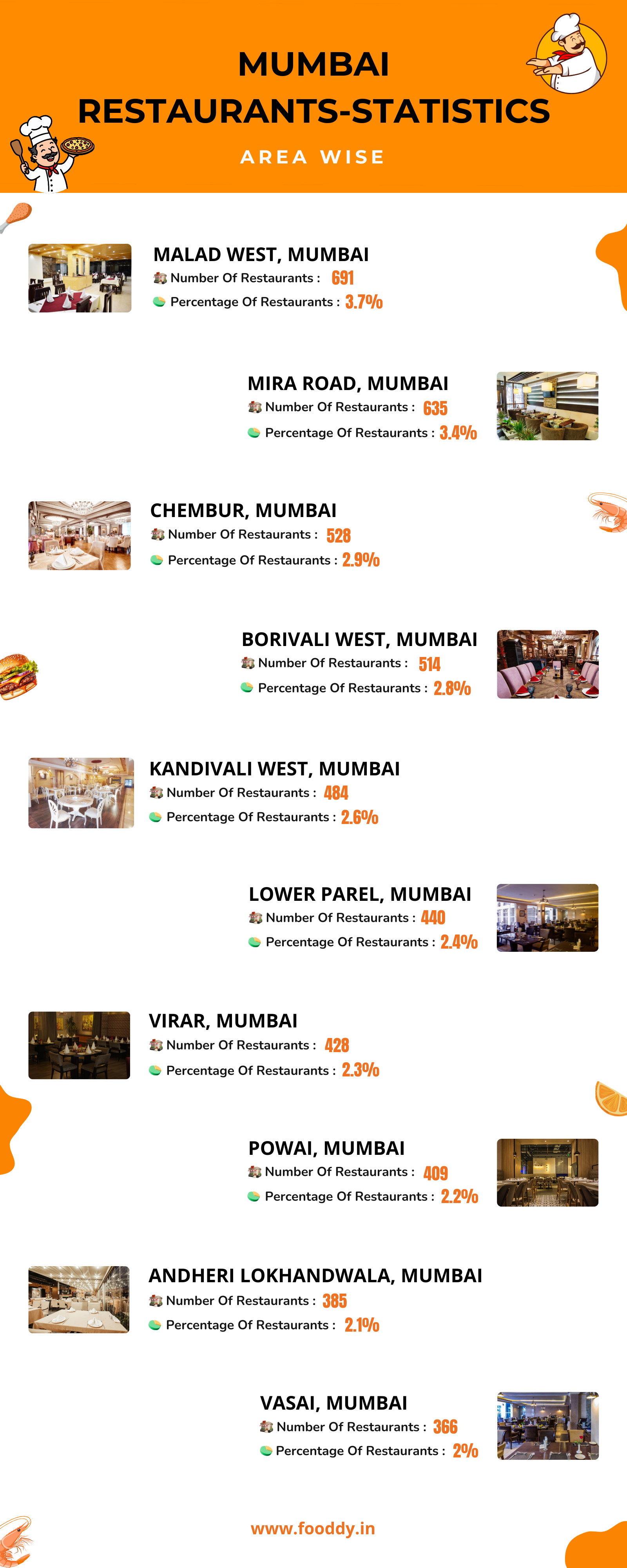
Being one of the largest metropolitan cities in India, Mumbai boasts thousands of restaurants throughout its neighborhoods, each with its unique tastes and budgets. Following is a distribution of restaurants by location.
How Many Restaurants in Mumbai Appear on Digital Platforms?
When people search how many restaurants in Mumbai, they often rely on aggregator or review platform counts. These listings show thousands of active restaurants but only represent digitally visible establishments.
Platform-based numbers exclude:
- Hyperlocal unregistered outlets
- Seasonal vendors
- Informal food operators
Therefore, platform listings do not equal the full operational inventory of the city.
Cuisine-Wise Restaurant Statistics in Mumbai
Cuisine representation in Mumbai reflects both diversity and demand elasticity.
Dominant Categories Include
- North Indian cuisine
- Chinese / Indo-Chinese
- Fast food
- Desserts and bakery formats
- Street food-inspired restaurants
North Indian and Chinese cuisines consistently rank among the most widely represented categories in listing-based distribution studies.
Fast food and dessert formats grow faster due to delivery compatibility and operational scalability.
Must See – Bengaluru Restaurants Statistics
Mumbai Restaurants Cuisine-Wise Breakdown
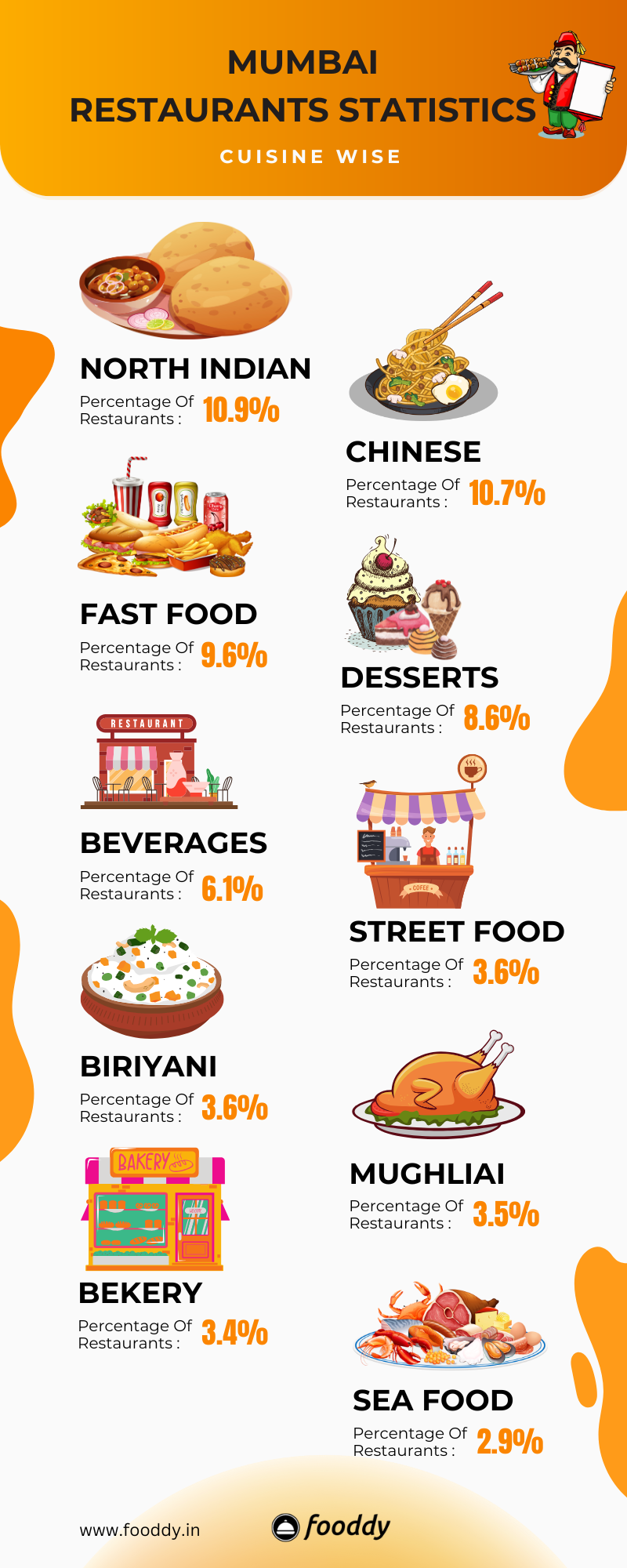
Mumbai is a food melting pot, providing everything from pure Maharashtrian cuisine to international gourmet cuisine. Following is the cuisine-wise restaurant distribution in Mumbai.
Restaurants Industry Analysis | Market Structure & Economic Value
Mumbai’s organised food services sector alone is valued in tens of thousands of crores annually.
Key Structural Characteristics
- Fine dining and casual dining dominate dine-out occasions.
- QSR and fast food dominate delivery occasions.
- Cloud kitchens expanded rapidly after 2020.
- Aggregator platforms influence customer acquisition and pricing.
This broader restaurants industry analysis shows that Mumbai’s ecosystem is scale-driven, competitive, and digitally integrated.
Area-Wise Restaurant Distribution in Mumbai
Restaurant density in Mumbai strongly correlates with
- Residential population density
- Commercial office clusters
- Metro connectivity
- Mall development
- Real estate expansion
High-density suburban zones such as Malad West and Mira Road reflect strong volume-driven demand.
Premium clusters like Lower Parel, Bandra, and Andheri West reflect higher ticket-size dining behavior.
Emerging zones such as Virar and Vasai show expansion-based growth rather than legacy density.
How Many Cafes Are There in Mumbai?
The café segment is one of the fastest-growing food categories in the city.
When analyzing how many cafes are there in Mumbai, classification matters. The count may include:
- Standalone coffee shops
- Dessert cafés
- Bakery cafés
- Café-style restaurants
Café growth is driven by:
- Remote work culture
- Student population density
- Social-media friendly interiors
- Beverage-focused profit margins
Café expansion is no longer limited to South Mumbai; suburban micro-markets now show strong café growth.
Popular Food Joints in Mumbai | Demand Behavior Patterns
Search interest around popular food joints in Mumbai typically aligns with:
- Nightlife-driven neighborhoods
- Youth-centric zones
- Corporate dining clusters
- Legacy establishments with brand recall
Consumer behavior patterns indicate
- Suburban areas favor value-driven family dining.
- Central premium zones prioritize experience-driven dining.
- Delivery-heavy micro-markets favor speed and affordability.
Organised vs Unorganised Restaurant Segmentation
Understanding the number of restaurants in Mumbai requires separating two major segments:
Organised Sector
- Registered chains
- Branded standalone outlets
- Hotel-backed restaurants
Unorganised Sector
- Street vendors
- Small local eateries
- Family-run operations
The organised segment continues expanding due to compliance requirements, digital discoverability, and brand standardisation.
Dataset & Methodology Perspective
Public restaurant datasets scraped from review platforms typically include:
- Restaurant name
- Location cluster
- Cuisine tags
- Rating
- Review volume
These datasets help analyze patterns but do not represent official census counts.
This is why queries like
- how many restaurants are there in Mumbai
- number of restaurants in Mumbai
produce different figures depending on methodology.
Neighborhood Growth & Restaurant Expansion Dynamics
Restaurant growth in Mumbai generally follows:
- Residential real estate expansion
- IT and corporate clustering
- Infrastructure upgrades
- Transit connectivity improvements
Suburban expansion continues increasing overall density, while premium zones maintain strong high-margin dining presence.
Spotlight | Prithvi Cafe Menu & Brand Recall Influence
Search interest around prithvi cafe menu reflects brand recall strength rather than scale dominance.
Prithvi Café is widely associated with
- Cultural identity
- Theatre-linked heritage
- Light café meals
- Desserts and beverages
Legacy restaurants often generate disproportionate search demand relative to total outlet count.
Technology’s Role in Mumbai’s Restaurant Growth
Three major technology-driven shifts shape Mumbai’s food ecosystem:
1. Aggregator Ranking Economics
Restaurants compete for visibility through rating optimization and promotional placements.
2. Delivery-Led Menu Engineering
High-margin, low-preparation dishes dominate delivery menus.
3. Data-Based Pricing & Inventory
Operators increasingly rely on analytics to optimize pricing, reduce wastage, and track peak demand hours.
Key Statistical Insights
- Mumbai exceeds 140,000 total food establishments across segments.
- Organised restaurant markets represent multi-thousand-crore economic value.
- North Indian and Chinese cuisines dominate representation.
- Suburban density outpaces central legacy markets in outlet volume.
- Café formats continue expanding in suburban growth corridors.
Conclusion for Mumbai Restaurants Statistics
Mumbai Restaurants Statistics ecosystem is defined by
- Scale
- Geographic diversity
- Category dominance
- Delivery integration
- Premium segmentation in select hubs
Understanding the total number of restaurants in Mumbai requires separating organised reporting, digital listings, and on-ground unorganised establishments.
As Mumbai continues expanding, the restaurant market remains one of India’s most competitive and data-rich urban food ecosystems.