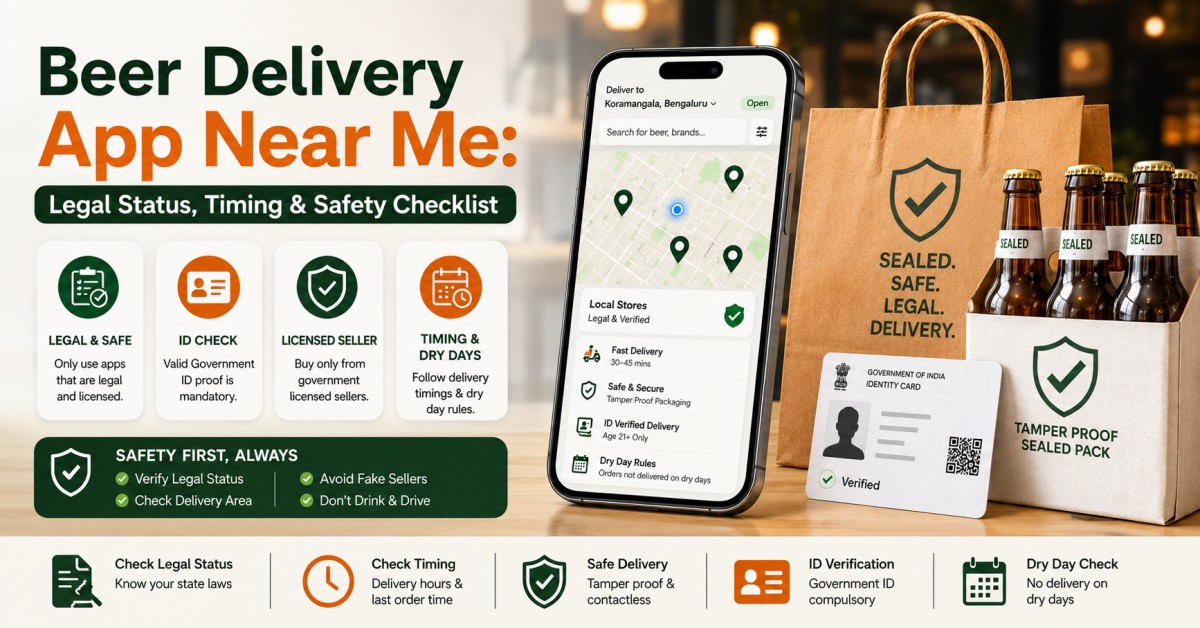
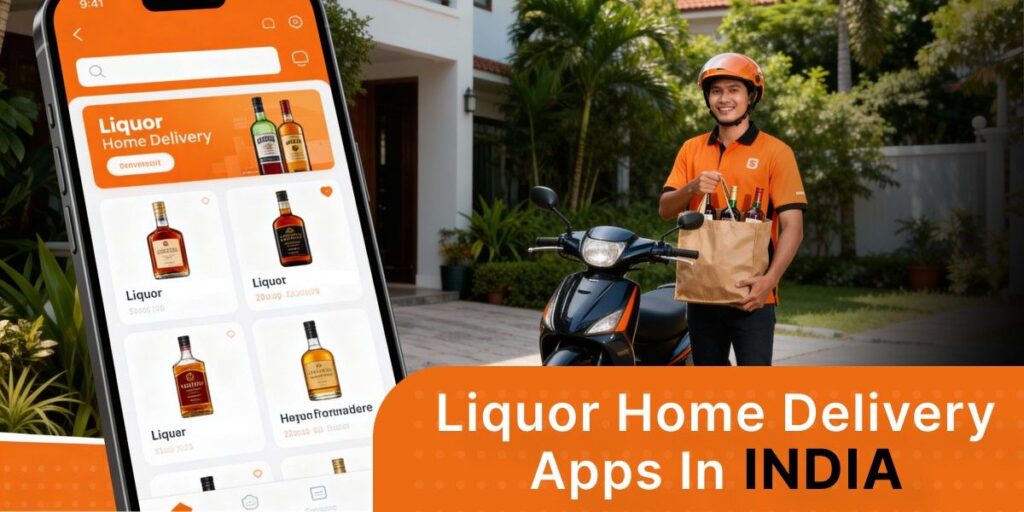
,Liquor home delivery apps in India are state-and-city dependent, because alcohol retail is regulated under state excise rules, prescribed hours, and date-based restrictions. In 2026, the most accurate expectation is “available after verification,” not “always available.”
TL;DR: Liquor “delivery apps” in India usually fall into three buckets—official state systems (rare but clear where they exist), retailer-run apps (strongest in specific metros and service zones), and discovery routes (maps/listings → call/WhatsApp → confirm cut-off, invoice, and ID checks). “Best” means reliability; “free” is usually conditional.
What the Keyword Means in 2026
Liquor home delivery apps in India mean a sealed bottle can be billed by an authorized seller and dispatched to a residential address with an invoice and age verification, subject to what is permitted and enforced locally. It does not mean open alcohol service, informal doorstep supply without billing, or a guaranteed 24×7 delivery promise.
This distinction matters because many searches happen late in the day. A clear definition prevents wrong expectations, reduces cancellations, and keeps the content aligned with how delivery works on the ground.
Key Definitions Used in this Article
Sealed-bottle dispatch means the package remains sealed until handover. Dispatch cut-off time is the latest realistic time a seller can bill, pack, and send an order, usually earlier than the printed closing time. A dry day is a date when alcohol sale is prohibited; when sale stops, legitimate delivery stops too.
Related – Liquor Delivery Apps in Bangalore
City-By-City – Apps People Mainly Use for Home Delivery
| City | Liquor delivery apps people mainly use (publicly verifiable) | If no reliable delivery app is available, what people mainly use instead |
| Mumbai | CheersByUnited, Living Liquidz | Google Maps + calling stores, listings + WhatsApp/calls for confirmation |
| Delhi | No widely documented, consistently available consumer liquor delivery app citywide (as of Jan 2026) | Maps/listings → call retailer → confirm stock, invoice, cut-off; pickup is common |
| Bengaluru | No widely documented, consistently available consumer liquor delivery app citywide; states have discussed pilots, but availability is locality-dependent | Maps/listings + direct retailer confirmation; avoid advance-payment traps |
| Hyderabad | No widely documented, consistently available consumer liquor delivery app citywide | Maps/listings + direct confirmation; stronger scam caution is needed |
| Chennai | No consumer liquor delivery app that is consistently documented citywide; state retail context dominates | Official context + outlet discovery via Maps/listings; pickup is common |
| Kolkata | West Bengal eRetail (WBSBCL) – Buyer app/portal | Official eRetail workflow remains the primary structured option |
Best Liquor Home Delivery Apps in India
- CheersByUnited (Mumbai region) – Best for a retailer-network experience with delivery coverage stated for the Mumbai region and clear operational promises like pay-on-delivery.
- Living Liquidz (Mumbai; iOS + brand website) – Best when the order is placed via the brand’s website/iOS presence and the delivery zone + cut-off are confirmed before billing.
- West Bengal eRetail (WBSBCL) – Buyer app/portal (Kolkata / West Bengal official system) – Best where an official system exists because ordering, buyer registration, and delivery workflow are structured and consistent.
- Bengaluru | Swiggy/Instamart “Drinks” section (availability varies by locality); some reports describe limited alcohol-delivery pilots | People notice it inside app/word-of-mouth → check availability by pin code | Verify exact product category (alcohol vs non-alcohol), locality availability, cut-off time, invoice, ID check
Practical note: Outside a few pockets, most cities don’t have a single, widely documented “liquor delivery app” that works reliably citywide. People still discover options using Maps/listings and then confirm with the retailer.
Free Liquor Home Delivery Apps in India
- CheersByUnited is the only one above that explicitly states “Free Home Delivery” in its official app listing.
-
Apps where “free” is typically offer/zone-based – Living Liquidz and official systems may show delivery fees or promos depending on location and checkout rules, so “free” should be treated as “verify at checkout,” not a permanent guarantee.
How People Actually Discover and Learn About these Apps
People in India usually discover “liquor delivery apps” through a repeatable, practical pattern that prioritizes what works today over what is promised online.
- App stores (searching retailer-run apps by known store chains)
- Brand websites (checking if delivery is offered in a specific service zone)
- Google Maps (finding licensed shops nearby, then calling to confirm “delivery today”)
- Listing platforms (when maps results are cluttered or inconsistent)
- Housing society and neighborhood groups (reliable shop names travel faster than app names)
- Social profiles of retailers (store network and service area cues)
News and policy chatter (search spikes when excise rules or pilots are discussed)
A simple verification workflow
A verification workflow prevents most failures and reduces scam exposure.
- Confirm seller identity (shop name + locality) before discussing payment.
- Confirm brand, variant, and bottle size before billing.
- Confirm invoice format and invoice handover at delivery.
- Confirm the dispatch cut-off time for that day and locality.
- Confirm age and ID verification at the doorstep.
- Confirm sealed packaging and intact seal at handover.
- Confirm substitution rules if the exact variant is unavailable.
Factors that Change Delivery Outcomes
Delivery outcomes change most often due to timing, locality coverage, stock stability, enforcement sensitivity, and whether invoice + ID checks are explicit.
Ordering earlier than cut-off windows, confirming stock before billing, and insisting on invoice-and-seal clarity make success more repeatable across cities.
A repeatable reliability score
A consistent scoring model keeps decisions stable even when listings change.
Delivery Confidence Score (0–10)
The score estimates whether an order will complete correctly under timing and compliance constraints. Five checks carry 2 points each: seller identity clarity, invoice clarity, cut-off clarity, ID verification clarity, and packaging/seal clarity.
- A score of 8–10 indicates high confidence
- 4–6 indicates moderate risk
- 0–2 indicates high cancellation or scam risk.
Scam and safety signals
Liquor delivery searches attract impersonation sites and payment traps in multiple cities, especially when legal delivery is unclear and demand is high.
The strongest risk signals are advance payment demands before identity confirmation, repeated QR scans claimed as “delivery verification,” and any claim that discourages invoices or ID checks. Reliable sellers make invoice and verification behavior explicit.
FAQs
Are liquor home delivery apps legal across India?
No single rule applies across India because alcohol retail is governed state-by-state and enforcement varies by city and period.
Which city has the clearest official online booking + delivery system?
Kolkata has a clearer system-led pathway through West Bengal’s official eRetail mechanism.
Why do many people still use maps and calls even when an app exists?
Because delivery is often locality-and-time dependent, and the fastest way to confirm “delivery today” is a direct confirmation of cut-off, billing, and ID checks.
What should “free delivery” mean in practice?
Free delivery usually means conditional free. The final bill is the only reliable comparison.