
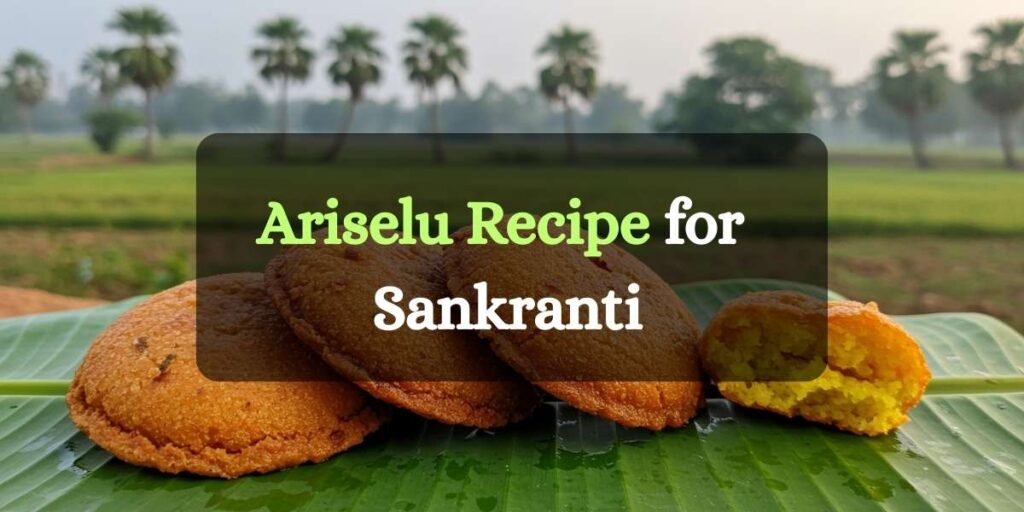
Ariselu (also known as a rice-and-jaggery festival sweet) is a Sankranti classic in many Andhra and Telangana homes. The taste is simple but special: deep jaggery sweetness, a gentle cardamom aroma, and crisp edges with a soft, cooked center, exactly what you want in an Ariselu Recipe for Sankranti.
If you’ve tried making Ariselu before and it turned hard, oily, or cracked, it usually comes down to one thing: jaggery syrup consistency. This recipe keeps everything quick to scan, beginner-friendly, and accurate, so you can make Sankranti-worthy Ariselu without stress
Quick Takeaways
- Syrup stage matters most: stop at soft-ball consistency.
- Dough texture: soft and shapeable (like soft chapati dough), not runny.
- Frying: low–medium heat for even cooking and a soft center.
- Oil control: Fry in small batches and press lightly after frying.
Recipe Snapshot
| Target keyword | Ariselu Recipe for Sankranti |
|---|---|
| Prep time | 20–30 minutes |
| Cook time | 25–35 minutes (batch frying) |
| Total time | ~60–90 minutes |
| Yield | ~10–14 pieces (medium size) |
| Texture | Crisp rim + soft, cooked center |
| Difficulty | Medium (syrup consistency matters) |
Also Read – Traditional Sankranti Sweets of Andhra Pradesh
Ingredients
Ariselu uses a short, traditional ingredient list. The key is using fine rice flour and making the syrup to the right stage.
| Ingredient | Quantity | Notes/swap |
|---|---|---|
| Rice flour (fine) | 1 cup | Homemade gives the best texture; store-bought works if finely milled (sieve once). |
| Jaggery (grated) | ¾ cup | Adjust sweetness to taste; darker jaggery gives a deeper flavor. |
| Water | ¼–⅓ cup | Use as needed to melt jaggery and control syrup thickness. |
| Ghee | 1–2 tsp | Adds aroma and helps keep the center softer. |
| Cardamom powder | ½–1 tsp | Optional but highly recommended for festive aroma. |
| Sesame seeds (white) | 1–2 tbsp | For coating or mixing in, adds crunch and Sankranti feel. |
| Oil (for deep frying) | As needed | Use a neutral oil; keep the heat steady for the best results. |
Optional
- Pinch of salt: balances sweetness and improves overall taste.
- Pinch of dry ginger powder: a winter-friendly twist (use lightly).
If you want authentic rice flour
Homemade rice flour often gives Ariselu that classic festival texture. If you’re short on time, skip this and use fine store-bought flour.
How to make homemade rice flour
Soak raw rice for 4–6 hours (or overnight). Rinse well, drain thoroughly, then grind to a very fine flour. Sieve once or twice until smooth and lump-free.
- Drain properly: excess moisture can make flour sticky and harder to handle.
- Sieve = smooth discs: coarse bits can cause cracks while frying.
- Keep it dry: store the flour covered and away from humidity until you’re ready.
Step-by-Step: Ariselu Recipe for Sankranti
Ariselu is easy once you nail two things: the jaggery syrup consistency and steady low–medium frying heat. Follow these steps in order and you’ll get the perfect festival texture—crisp edges, soft-cooked center, and a rich jaggery-cardamom aroma in every batch
Step 1: Prep sesame (optional, but classic)
If you love the sesame finish, keep sesame seeds ready in a small plate. You can coat Ariselu either before flattening or after shaping.
- Option A: Dip each dough ball in sesame, then flatten.
- Option B: Sprinkle sesame onto the disc after flattening.
Step 2: Make jaggery syrup (the key step)
Add grated jaggery and water to a pan. Heat on medium and stir until jaggery melts completely. If your jaggery has impurities, strain the syrup once (optional but helpful for a smoother dough).
How to test syrup consistency (soft-ball cue)
This simple water test helps you stop at the right stage without guesswork:
- Drop a tiny bit of syrup into a bowl of water.
- If it doesn’t dissolve and you can press it into a soft ball, it’s ready.
Stop cooking here. Overcooking the syrup can make Ariselu turn hard after cooling.
Turn off the heat and mix in:
- Ghee
- Cardamom powder
- Pinch of salt (optional)
Step 3: Make the dough (aim for soft chapati dough)
While the syrup is still hot/warm, add rice flour gradually, mixing continuously. You want a dough that is soft, smooth, and holds shape when rolled.
Dough consistency checklist
- Should feel: soft, pliable, slightly warm.
- Should not be: runny, sticky like batter, or dry/crumbly.
Quick dough fixes
- Too sticky/loose: add 1–2 tbsp rice flour and mix well.
- Too dry/cracking: add a few drops of warm water or ½ tsp ghee.
Cover and rest the dough for 15–20 minutes. This helps it bind, making shaping and frying easier.
Step 4: Shape Ariselu (easy method)
Grease your fingers with a little ghee. Divide the dough into lemon-sized balls. Flatten each ball into a thick disc using one of the methods below.
- Greased plastic sheet method: place ball on a greased sheet and press gently into a disc.
- Greased palm method: flatten in your palm (best when the dough is perfectly smooth).
Thickness guide (important)
- Too thin: can crack or become overly crisp.
- Too thick: the center may stay undercooked unless fried longer on low heat.
- Best: medium thickness with smooth edges.
Step 5: Fry (low–medium heat only)
Heat oil in a deep pan. Maintain low–medium heat—this is what gives Ariselu its signature soft center. Slide one disc gently into the oil.
Simple frying rhythm
- Let it float up.
- Fry 10–20 seconds, then flip once.
- Fry until golden-brown (avoid dark brown).
Remove and drain on a paper towel. For a cleaner, less oily finish, press gently between two spatulas for 1–2 seconds (do not smash).
Batch tip: Fry 2–3 at a time to keep oil temperature stable.
How to know Ariselu is perfect
- Golden-brown color
- Slight crisp on the edges
- Soft, cooked center (not raw dough)
- Rich jaggery aroma (not burnt)
Troubleshooting (fast fixes)
| Problem | Why it happens | Fix |
|---|---|---|
| Ariselu turns hard | Syrup cooked too much (too thick) | Stop at the soft-ball stage; use slightly more water while melting jaggery next time. |
| Disc breaks in oil | Dough too dry or the flour is coarse | Add a little ghee/warm water; sieve flour for smoother dough. |
| Spreads too much | Syrup is undercooked, or the dough is too loose | Cook syrup slightly longer to reach the soft-ball stage; add flour gradually. |
| Center undercooked | Oil too hot or discs too thick | Lower the heat and fry longer; flatten slightly thinner next batch. |
| Too oily | Oil not hot enough or overcrowding | Keep steady low–medium heat; fry fewer pieces per batch; press lightly after frying. |
Variations:
Sesame Ariselu
This is the classic Sankranti finish with a little extra crunch.
- Mix 1 tbsp sesame into the dough.
- Coat the outside with sesame before flattening for a prettier look.
Dry ginger winter twist
Add a tiny pinch of dry ginger powder for a warm winter note (keep it subtle).
Ghee-rich, softer center
If you prefer a softer bite, add 1 extra tsp ghee to the dough (especially helpful in colder weather).
Storage & make-ahead tips
Ariselu tastes best on the same day, but you can store it well for a couple of days if cooled and sealed properly.
Storage
- Cool completely before packing.
- Store in an airtight container.
- Best within 2–3 days at room temperature.
How to refresh
- Warm in a pan on low for 20–30 seconds per side, or
- Microwave for 8–12 seconds (just to soften slightly).
Make-ahead
- You can make the dough a few hours early.
- Keep it covered so it doesn’t dry out.
Serving ideas for Sankranti
For a simple festival plate that feels complete, pair Ariselu with other winter favorites and a hot drink.
- Ariselu + til laddoo + peanut chikki
- Serve with ginger chai or filter coffee
- Add a tiny drizzle of warm ghee on top for aroma
FAQs for Ariselu Recipe for Sankranti
Can I use store-bought rice flour?
Yes. Use fine rice flour and sieve it once for smoother discs and fewer cracks while frying.
What’s the most important step in Ariselu?
The jaggery syrup. If you stop at soft-ball consistency, the dough binds better and Ariselu stays softer after cooling.
Why does my Ariselu become hard the next day?
Most often the syrup was cooked slightly more than needed. Airtight storage also matters—keep Ariselu sealed once completely cooled.
Do I need sesame seeds?
Not mandatory, but sesame adds crunch and a traditional Sankranti touch.
Can I shallow fry instead of deep fry?
Deep frying gives the most even cooking and the best texture. Shallow frying can make Ariselu uneven, oily, or undercooked in the center.